
'That way you're not hostage just to US sort of exports to India.'

'Focus will be on smaller loan amounts to meet the needs of affordable homebuyers.'

An internal working group set up by the RBI has proposed to raise the cap on promoters' stake in private banks from the current 15 per cent to 26 per cent in 15 years. The group has also recommended that large corporate or industrial houses may be allowed as promoters of banks only after amendments to the Banking Regulation Act and strengthening of the supervisory mechanism for conglomerates, including consolidated supervision. The Reserve Bank of India had constituted the internal working group (IWG) on June 12, 2020, to review extant ownership guidelines and corporate structure for Indian private sector banks.
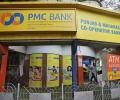
In its EoI document, the bank had said it was open to converting into a small finance bank.

The government on Saturday announced a host of measures such as setting up of a new Fund of Funds Scheme (FFS) with Rs 10,000 crore corpus; and extension of period of incorporation by five years with a view to promote growth of budding entrepreneurs.

The World Bank must become Archimedes's lever to help change the world into a more prosperous, inclusive, and sustainable planet in the 21st century. The change in leadership now provides that opportunity, observes Ajay Chhibber.

Believe it or not, the regulator is even stretching its arm to identify stressed borrowers and gauge the 'distance to default' as a measure of a particular bank's fragility, reveals Tamal Bandyopadhyay.

Seasoned bureaucrat and a stickler for rules Finance Secretary Tuhin Kanta Pandey will be at the helm of capital market regulator, Securities and Exchange Board of India (SEBI), for three years. The 1987-batch Odisha-cadre Indian Administrative Service (IAS) officer, Pandey, would replace Madhabi Puri Buch, whose three-year term ends on Friday.

'The finance minister has done as much as she can when you look into the fiscal constraints she had.'

Only when we are part of the same family, which will happen down the line, then, of course, we will give them (PMC depositors) all the assurance and the comfort.'

Banks in India must have a modern approach, suggests a panel comprising of banking bigwigs.

New norms are in place to strengthen regulations for this set of lenders which has been playing a critical role in Asia's third largest economy, notes Tamal Bandyopadhyay.

'I believe that the overall demand for commercial vehicles will improve, even though there is a slowdown in the GDP.'

The finance minister, in her Budget speech, should focus more on what she is directly responsible for, rather than on programmes where her role is largely supportive, notes Nitin Desai.

'In times of recovery, we may see a rural-urban divide with the urban pockets affected more by COVID-19, but the MFI business model should encourage banks to handhold them in this hour of crisis,' notes Tamal Bandyopadhyay.

These are the highlights of the Union Budget 2025-26 presented by Finance Minister Nirmala Sitharaman in Parliament on Saturday.

Prominent exits by promoters included a Rs 15,300 crore share sale in Indus Tower by Vodafone Plc, a Rs 9,300 crore share sale by the Tata group in Tata Consultancy Services.

Draft guidelines for Small Banks and Payments Banks were issued by the RBI in July and comments were invited till August 28.

The need for a manufacturing policy, reining in food inflation and raising investment in the country were among key suggestions given by economists who met Finance Minister Nirmala Sitharaman and senior ministry officials in the first round of pre-Budget consultations on Friday.
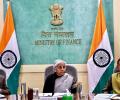
The Budget assumes significance as it comes on the back of lower-than-expected growth numbers during the second quarter and geopolitical uncertainty.

Fundraising momentum is expected to accelerate further in the New Year, potentially surpassing 2024's record figures

Widespread use of crypto assets, including stablecoins, can have a negative impact on the macroeconomic and financial stability of a country, the Reserve Bank of India (RBI) said on Monday. In its Financial Stability Report (FSR), the banking regulator highlighted that excessive use of crypto assets can reduce effectiveness of monetary policy, worsen fiscal risks, circumvent capital flow management measures, divert resources available for financing the real economy and threaten global financial stability.

Every banker loves the four-letter word Casa as it plays an important role in lowering the cost of deposits. Every bank wants to increase its Casa, as a higher portion of Casa in the overall deposit liability brings down its cost of money, points out Tamal Bandyopadhyay.

Isn't it time to review the 'fit and proper' criteria for banking licence, particularly with reference to individuals applying for it, asks Tamal Bandyopadhyay?

While the capital spending is being maintained at 3.1 per cent of the GDP, a little more would have boosted economic growth even further, suggests Rajiv Memani.

Water projects firm Vishnu Prakash R Punglia, the 20th company to launch its IPO in the current year, saw its shares closing at a 47 per cent gain over its issue price on Tuesday. Such a huge one-day pop is considered rare; however, it has become the norm this year. The average listing-day gain for these 20 IPOs in 2023 is 34 per cent, and their average gain to date stands at 46 per cent.

For now, the concerns over bad loans have taken a back seat; a bigger challenge for the banking community is credit growth, explains Tamal Bandyopadhyay.

Banks are allowed to invest up to 10 per cent of the paid-up or unit capital in Category-I or Category-II Alternative Investment Funds

Following the lacklustre growth numbers in the second quarter (Q2FY25), economists believe the upcoming Union Budget for 2025-26 should focus on reforms that will stimulate consumption, manufacturing and spur employment. India's growth unexpectedly slowed to 5.4 per cent in the second quarter, due to low capital formation, weak consumption, besides adverse weather impact.
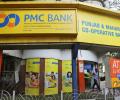
Mired in corruption, politics and with a history of suicides by its hapless depositors, PMC Bank's revival is a challenge very different from Yes Bank and LVB, both for the regulator and the rescuer, observes Tamal Bandyopadhyay.

While the collapse of a large financial intermediary can wreak havoc on the system because of the interconnectivity, a large business conglomerate too can play spoilsport if the banks have too much exposure to the entity, explains Tamal Bandyopadhyay.

Udaan, India's largest business-to-business (B2B) e-commerce company, has received approval from the National Company Law Tribunal (NCLT) for its internal corporate restructuring plan, according to sources. By consolidating into a single entity, the restructuring will enhance Udaan's agility and pave the way for various financing options, including the ability to pursue an initial public offering (IPO) in India by 2026, according to people familiar with the matter.
'The deal pipeline across products is robust for 2024.'

While the corporate sector has benefited from massive capital expenditure, leading to sky-rocketing stock prices, investors would do well to keep an eye on the macroeconomic picture and government finances, not just corporate profits, for signs of trouble, alerts Debashis Basu.

'Consider 40% to 50% in equities, 10% in gold as a hedge, and the remaining 30% to 40% split between multi-asset funds and hybrid funds.'
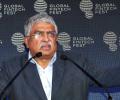
'Binary fission will happen -- startups will lead to more startups.'

Flush with liquidity, banks are eager to lend. And, therein lies the problem, warns Tamal Bandyopadhyay.

The size of the hole in today's banking crisis appears to be roughly 10 per cent of GDP.

The difference between what the banks play in the US and India is not that of soccer and football but rugby and football. SVB also has a unique character. But when risks are mispriced, the fallout could be very similar, points out Tamal Bandyopadhyay.

One thing is for sure: It smacks of the regulator's lack of confidence in the bank's board, points out Tamal Bandyopadhyay.
 © 2026 Rediff.com - Advertise with us - Disclaimer - Privacy Policy - Sitemap - Feedback - About us - Terms of use - Grievances